
Brain.fm vs Endel vs Mind Focus: A comparison
An honest analysis of the three most famous apps for improving concentration with sound.

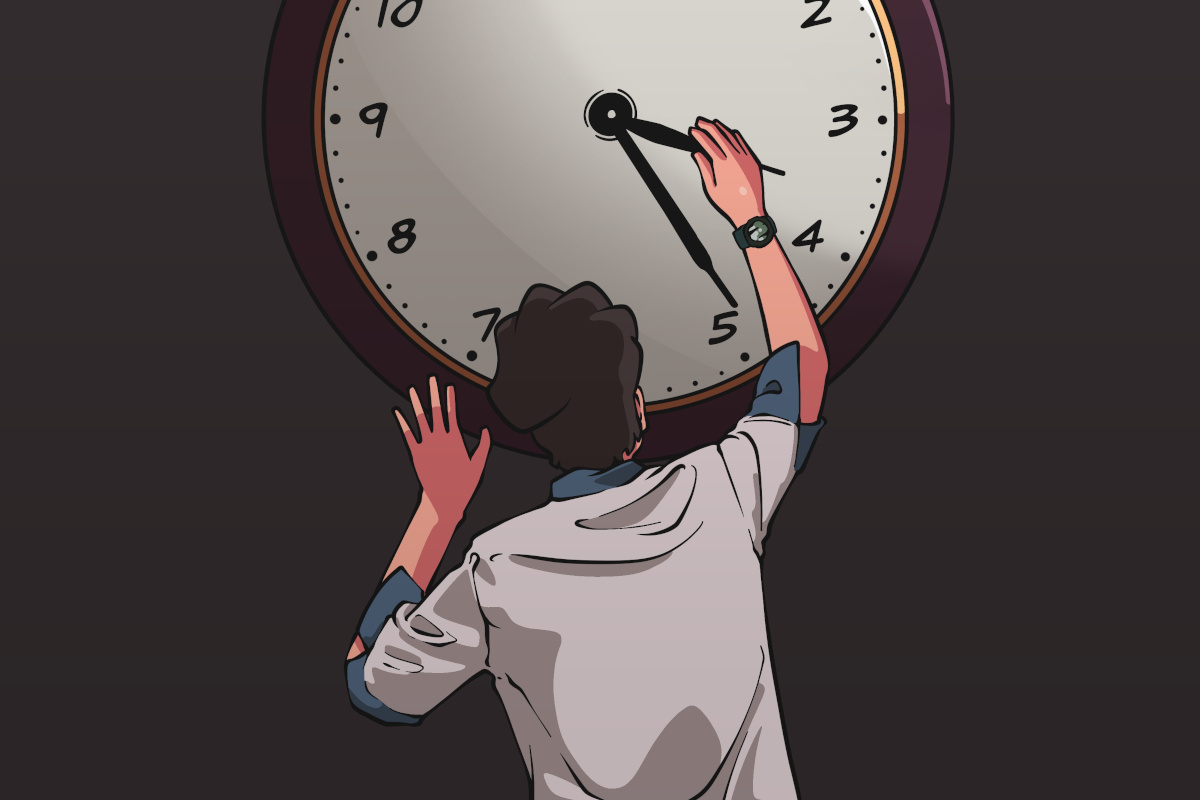
Pomodoro works, but it has a fundamental problem. Flowmodoro solves it by putting the flow state at the centre.
Is this article another text riddled with studies that I, and only I, find interesting?
Of course.
This is my obsession and my house, but I also like it when whoever makes a claim actually proves it. It’s the right thing to do, the burden of proof and all that, which seems lost these days. So let’s get started.
The Pomodoro technique works, that’s undeniable, which is why it was the first I implemented in Mind Focus back when it was just an ugly app on my phone for strictly personal use.
The data doesn’t lie, and my personal experience (even if we shouldn’t generalise that kind of thing) doesn’t either.
Some studies (Biwer et al. 2023) show less fatigue, less distraction and greater concentration when using Pomodoro, while other data shows that nearly 90% of those who use these techniques show positive results and 20% less fatigue.
Bottom line: structured intervals not only improve performance, they also prevent the decline in our cognitive capacity as the day goes on (Ariga and Lleras 2011). Regular breaks are essential for optimal performance and structured intervals help.
In short, Pomodoro is great… But it has a fundamental problem that rarely gets discussed.
This has to do with the other great ally of our mental capacity and cognitive performance…
Csikszentmihalyi (yes, I had to copy and paste the name from Wikipedia) has spent decades studying flow: the state in which we become completely absorbed in an activity as if there were nothing else, with full concentration.
A state that distorts time and in which there’s no trace of procrastination or the usual doubts about oneself or the task.
In one way or another, we’ve all experienced that flow state at some point. In it, performance reaches its peak, and that’s not a manner of speaking, it’s a psychological state with defined and measurable characteristics.
Flow state is what we’re actually after and what has been shown to predict real performance (Engeser and Rheinberg 2008), boosting it in spectacular fashion (up to 500% according to McKinsey data and a 10-year follow-up of senior executives, though it’s true that said 500% is self-reported, but even so, it’s another valuable data point).
And here lies the problem to solve:
The fact that, once you enter flow and slide through it, the Pomodoro bell rings at 25 minutes and pulls you out of the place you’d worked so hard to reach.
That has a cost that gets underestimated.
Ghosts don’t exist and multitasking doesn’t either, it’s a myth. There are only constant shifts in concentration and context by the brain, but they’re not free and, on top of that, we live with relentless interruptions.
The cost is, specifically, 23 minutes and 15 seconds on average.
That’s what Mark, Gudith and Klocke (2008) calculated that it takes to return to a task deeply and effectively after a distraction.
That cognitive cost is made up of two stages according to the studies:
But in today’s fragmented work, interruption is the norm and, unless you’re the kind of person who fits exactly into 25-minute intervals, classic Pomodoro can contribute to that fragmentation.
Now, I’m not disowning Pomodoro. For me, and for lighter and everyday tasks, it improves the work, but it can leave us far from our peak performance.
This is where another fundamental concept about how we humans work comes into play.
We operate better in structured intervals and not by whim. There’s a biological basis for the idea that the brain needs periodic rest, and it goes beyond the mere accumulated fatigue after a period of work.
Kleitman (the same man who discovered REM sleep) proposed in 1963 that the 90-minute sleep cycle extends into waking life as the «Basic Rest-Activity Cycle» (BRAC):
That is, there are cyclical fluctuations in alertness, approximately every 80–120 minutes, with a first half of greater activation and a second where the brain tends to seek rest.
He’s not alone in that. Lavie (1992) provided evidence that these ultradian cycles exist during waking hours, with fluctuations in sleep propensity of similar periodicity.
Hayashi et al. (1994) also measured the cognitive performance of students every 15 minutes over 9 hours and found fluctuations corresponding to the BRAC in the behavioural and subjective variables.
Very interesting, and something that brings us closer to the key point, but it’s worth noting that the science on cognitive capacities isn’t always so mathematical.
For example, Neubauer et al. (1995) found no significant 90-minute periodicity using more conservative statistical methods with 60 subjects.
In other words, evidence exists and we have natural cycles of alertness and disconnection, but the specific numbers may not be so clear-cut.
What is consistent is that:
Here enters Flowmodoro, the technique that blends Pomodoro with that coveted flow state.
Flowmodoro doesn’t impose rigid timing on our concentration, we define the duration of the intervals ourselves. And breaks in Flowmodoro work also in proportion: deeper work, more rest needed.
Elhajj et al. (2025) explicitly acknowledge in their review that Pomodoro has known limitations for deep or creative work, recommending adjusting interval duration for cognitively complex tasks.
That is exactly the principle of the Flowmodoro technique in the Mind Focus app, where you define exactly those intervals to your liking.
Albulescu et al. (2022), in their meta-analysis on microbreaks, found that the effects of brief breaks on performance are only significant for low cognitive demand tasks. For demanding tasks, those breaks need to be longer.
That’s why the strict duration of Pomodoro makes no distinction between writing an email and solving a difficult problem.
But I insist, that doesn’t invalidate Pomodoro.
It’s a rigid system that works well when the task is also rigid. If we’re answering emails, pushing pencils and turning those necessary wheels that keep our tasks moving forward, it helps.
But for work that requires depth, for problems that need you to lose yourself in them with deep concentration or a flow state, in order to find the solution… the best timer is the one that doesn’t ring until you decide it’s been enough.
That is Flowmodoro, but it usually requires a period of searching and adjustment to optimise it.
Every person is different, but we have a common foundation.
That’s why the first rule is that, for deep work and chasing a flow state, work intervals appear to be longer than Pomodoro’s 25 minutes.
How much longer?
That’s something we need to discover ourselves and adapt to our particular case.
Some advocate for 50-minute work periods with 10-minute breaks, and some data support that, but it’s possible that many people orbit better towards 40-minute intervals or so, with 5–10 minutes of rest, at least until several cycles have passed and that rest needs to be more extended.
That’s why Flowmodoro requires a certain phase of adjustment and exploration, but the reality is that when you find your right cycles, the flow state is no longer that chimera you only manage to reach once in every hundred attempts.
An honest analysis of the three most famous apps for improving concentration with sound.
No subscriptions, no data, no smoke. The principles that guide the Ataraxia apps.
Why every element of the app exists and what the scientific research has to say about it.